
Toledo, OH and Northwest Ohio
Deck Staining and Sealing in Perrysburg, OH
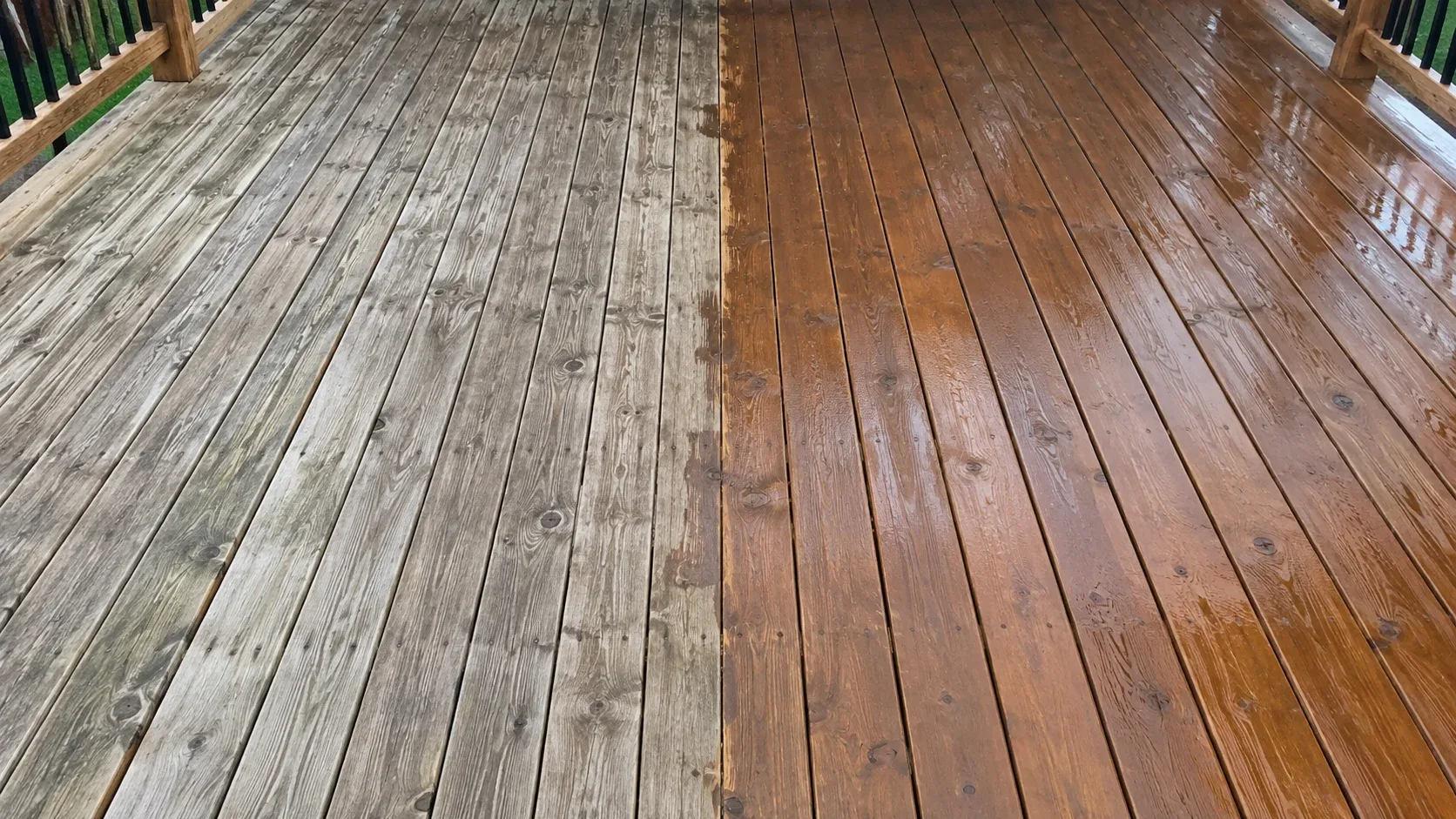
Cleaning, brightening, sanding where the boards actually need it, then a penetrating finish that stands up to an Ohio winter. The least costly way to keep a timber deck alive on this side of the state.
- Footings built for this frost line
- Permits and inspections handled
- Written scope before we start
Deck Staining and Sealing planning range for Perrysburg
Typical price range
From:$1,000To:$1,600
- Clean and stain, semi transparent$1,000–$1,600
Planning range, not a quote. It assumes a typical deck; very tall decks and hard access need a site visit before anyone can give a firm price.
Toledo Custom Decks plans deck staining and sealing in Perrysburg, OH. Staining and sealing only last when wood moisture, surface preparation and weather timing are right.
Prepare the wood before choosing the finish
The scope should identify cleaning, stripping where needed, sanding, board and fastener repairs, moisture condition and the selected product. A coating cannot solve rotten wood or a surface that stays wet.
Choose a weather window and maintenance plan
Review shade, tree debris, drainage and sun exposure before selecting a transparent, semi-transparent or solid finish. The work should include drying time and a realistic maintenance interval.
What changes for deck staining and sealing in Perrysburg
Perrysburg has a Wood County location south of the Maumee River, a city zoning office and a separate county building review. Homeowners used to the Lucas County process can start with the wrong office, because Perrysburg splits zoning (city) from building review (Wood County).
Perrysburg issues its own zoning permits, contracts with Wood County Building Inspection for building permits, and requires the zoning permit before the building permit is issued. For this address, the first useful decision is to obtain the city zoning permit first, then take the approved plan to Wood County Building Inspection.
Research checkpoint for this Perrysburg project
Moisture and shade determine whether a finish bonds and how soon it needs attention. In Perrysburg, that concern meets a specific local condition: a Wood County location south of the Maumee River, a city zoning office and a separate county building review. This changes the questions that belong in the first site visit.
Assess drying and surface condition at the address before setting the product and schedule. The page research therefore asks one project-specific question: Has the City of Perrysburg zoning permit been issued before the Wood County building application is filed?
Local source: City of Perrysburg Planning & Zoning. Checked October 11, 2026.
Questions for the first site visit
- Is the wood dry and sound enough for finish?
- What causes moisture or debris to stay on the deck?
- Which finish gives the right balance of look and maintenance?
- Has the City of Perrysburg zoning permit been issued before the Wood County building application is filed?
Why homeowners pick Toledo Custom Decks
Footings built for this frost line
Northwest Ohio sits deep enough in the Lake Erie snowbelt that local jurisdictions generally call for footings well past 32 inches, deeper than central or southern Ohio requires. Every post we set lands on a poured footing sized to the depth your jurisdiction sets, which is what keeps a deck level through a decade of freeze and thaw.
Permits and inspections handled
We work out which department your address answers to, whether that is the City of Toledo, a suburb running its own building office, or Lucas or Wood County, pull the permit, meet the inspector and hand you the signed card. An unpermitted deck becomes your problem the day you sell the house.
Written scope before we start
Materials, framing spec, hardware, timeline and price in writing before anybody swings a hammer. No verbal change orders.
Deck Staining and Sealing questions we get asked
How often should a deck be sealed in Perrysburg?
Every two to three years on the horizontal boards. Railings and vertical faces usually last a little longer because they shed water and take less direct sun. A deck facing south or west generally wants attention sooner than one that sits in shade for most of the day. There is a simple test that costs nothing: drip water onto the boards, and if it soaks straight in rather than beading on the surface, the finish is spent and the timber underneath is taking on water.
Can you seal a brand new deck?
Not straight away. Fresh pressure treated lumber comes out of the treatment process still wet, and coating it before it has dried traps that moisture inside and shortens the life of the finish considerably. We typically wait two to four months, then test with water before applying anything at all. Cedar and kiln dried stock can often be coated sooner than that.
Who issues a deck permit in Perrysburg?
Perrysburg sits in Wood County, not Lucas, so both the office and the paperwork differ from most of the rest of our service area. The City of Perrysburg issues its own zoning permit first, and Wood County Building Inspection issues the building permit behind it. We prepare the framing plan to the county's standard and file both in the right order, so a Perrysburg project does not lose time to paperwork built for the wrong county.
Does building near the Maumee River bluff change anything?
Yes, on any lot close to the bluff by Fort Meigs or elsewhere along the river. Bluff edge setbacks and slope stability matter more here than on a flat interior lot, and footings sometimes need to be positioned or sized differently to account for the grade falling away toward the water. We walk the actual site before drawing a layout rather than assuming a standard lot applies.
What should be checked before hiring deck staining and sealing in Perrysburg?
Obtain the city zoning permit first, then take the approved plan to Wood County Building Inspection. The builder should also confirm the scope, existing condition and the approval route before work starts. Assess drying and surface condition at the address before setting the product and schedule.